

Paper edge protectors for pallet packaging are the components that keep a stacked load from damaging itself. On an export pallet, the cargo is held together by film and strap, and both of those apply force to the outer edges. Edge protectors sit at exactly that interface, so the force travels through paper instead of through the product.
The reason this matters commercially is simple. A pallet that arrives intact is a pallet nobody inspects. A pallet with two crushed corners triggers a claim, an inspection, photographs, email threads and a replacement shipment — costs that usually exceed the price of the packaging several times over. Edge protection is one of the cheapest ways to remove that risk from a shipment.
Export pallets fail in a small number of predictable ways. Naming them makes the packaging decision much easier, because each one is addressed by a specific part of the pallet system.
| Risk | What happens | Component that addresses it |
|---|---|---|
| Strap cut-in | Tension concentrates on a bare corner and deforms the carton | L-profile at each strap line |
| Corner crushing | The corner takes impact during loading, lifting or unloading | Corner protectors, full height |
| Load shifting | The stack leans as film relaxes or as the container moves | Corner protectors plus film, applied in the right order |
| Bottom-layer collapse | The lowest cartons carry the whole stack on a pallet deck | Flat strips or boards under the bottom layer |
| Moisture and condensation | Paper softens, print runs, metal marks | Dry protectors, correct storage, film over the load |
A pallet is a stack of boxes, and a stack of boxes is really a stack of edges. Every corner carries the weight of everything above it, and every corner is the first thing that touches the pallet beside it in a container. That is why corner protection and edge protection are usually the same purchase decision.
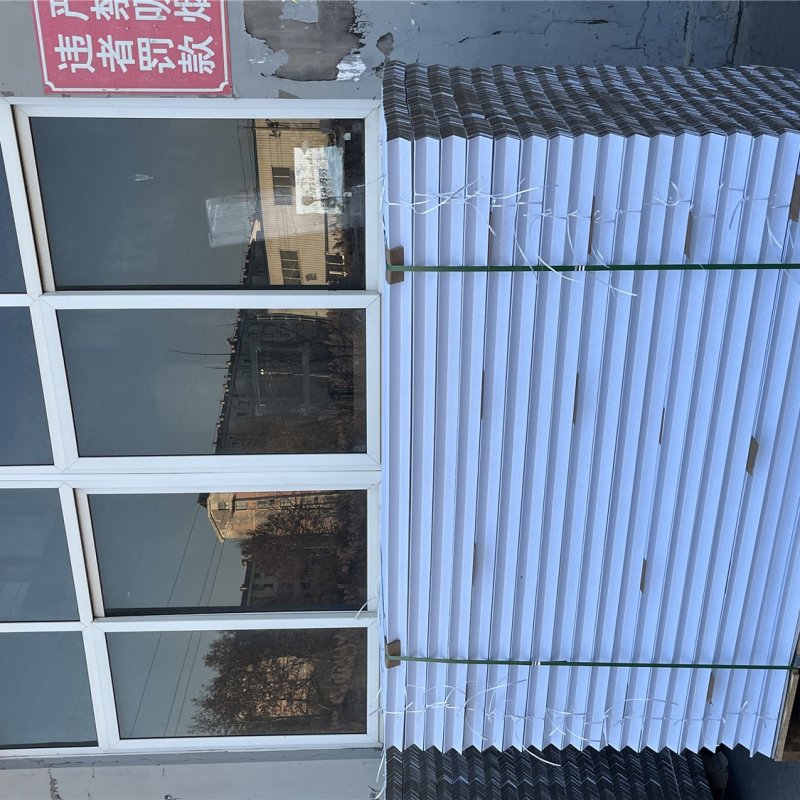
They add a rigid, replaceable interface at the point where the load meets the outside world. Three effects follow.
First, the corner keeps its geometry. A protector holds the two faces of the carton corner at a fixed angle, so the corner cannot fold inward when the film pulls or the stack settles.
Second, the strap load spreads. Instead of a line of tension against a carton edge, the strap presses against the full width of the leg, and the carton face under it stays flat.
Third, the protector absorbs the small impacts that would otherwise reach the product. It is sacrificial by design: a dented protector that is discarded at unpacking has done its job.
Strapping is the highest point load in a pallet pack. A PET strap tensioned to hold a heavy load is pressing on a few millimetres of carton edge, and paper board will deform under that concentration unless the load is spread.
Two details decide whether the protector actually works at the strap line. The first is position: the strap should cross the middle of the leg, not its outer edge, because a strap at the edge of the board acts almost like a bare corner. The second is leg width relative to strap width: a leg only a few millimetres wider than the strap gives the load nowhere to spread.
Where a pallet is strapped heavily and then wrapped, the protector also keeps the film from being cut by the strap edge, which is a common cause of a wrap that opens in transit.
Stability is a sequence, not a product. The order in which the components are applied changes the result.
Corner protectors first, positioned on all four vertical corners of the stack.
Strapping over the protectors, with the strap crossing the leg, tensioned to a figure agreed at the trial.
Stretch film over the whole pallet, including the top and the pallet junction, so the load and the pallet move as one unit.
Top protection where the stack carries another pallet or is exposed to dust and water.
Applied in that order, the corners stay square while the film relaxes and the strap retains tension. Applied in the reverse order — film first, protectors pushed under it — the protectors move, the film is already relaxed, and the pallet looks protected without being protected.
The pattern across industries is the same: a finished surface, a heavy concentrated load, or both.
Furniture and joinery. Banded and veneered edges cannot be repaired invisibly, and flat-pack cartons are handled repeatedly between factory, warehouse and retail.
Appliances and electronics. Painted steel and plastic housings mark at the edge before they dent on the face; condensation inside a wrapped pallet is a second risk.
Building materials. Boards, doors, cladding and panels are stacked on edge, so the bottom edge carries the stack and every corner takes the handling.
Metal products. Profiles, sheet bundles and coils need protection from strap pressure, from each other, and from marks where paper meets bare steel in a humid container.
Paper and print. Reels, sheets and printed board need edge protection plus layer separation, because a scuffed edge on printed stock is a rejected pallet.
Claims are rarely caused by an exotic failure. They come from the same five interfaces, and each has a cheap control.
Walk around a finished pallet and list everything it touches: the deck, the strap, the film, the neighbouring pallet, the container wall, the forklift. Each contact is a place where a protector either exists or does not. Most damage reports trace back to one interface that was left bare.
A written pallet specification — profile, dimensions, strap positions, film wraps, corner count — turns a judgement call into a check. Photograph the approved pallet and keep it as the reference. The failure mode you are preventing is not a bad first pallet; it is the thirtieth, packed on a Friday by someone who has run out of corners.
Where a claim does occur, photographs of the pack before loading and on arrival separate a packaging failure from a handling failure. That distinction decides who pays.
Sea freight adds duration and humidity to everything a road shipment already does. Three selection points follow.
Duration. A longer transit means more vibration cycles and more opportunity for abrasion. Protect the interfaces that rub, not just the ones that get hit.
Humidity. Paper absorbs moisture, and a damp protector loses the stiffness that made it useful. Fit protectors dry, store them wrapped and off the floor, and keep them out of contact with wet timber or a wet deck. Where the cargo is moisture-sensitive, discuss a coated board with the supplier and treat ventilation as part of the pack design.
Container behaviour. Pallets move inside a container during a sea passage. Corner protectors and film work together to keep the block of cargo coherent; a pallet with protectors only at the top corners is relying on the film alone at the bottom, which is where the load is greatest.
The same logic applies to the strapping and film selection, because the three components are chosen together or not at all. The U-shaped range is used where a panel edge has to be covered on both faces rather than at a corner.
A professional export pack is a small system with five layers, and the edge protectors are the interface layer rather than the whole answer.
| Layer | Component | Function |
|---|---|---|
| Base | Pallet, plus flat strips or a board | Separates the load from the deck and spreads the bottom load |
| Interface | L-profile or U-profile edge protectors | Spreads strap pressure, keeps corners square |
| Containment | PET or PP strapping | Holds the stack in compression |
| Enclosure | Stretch film, top cover | Unitises the load, keeps out dust and water |
| Identification | Printed protectors or labels | Marks the pallet without touching the product |
The advantage of treating this as a system is that each layer can be specified against the same information: load weight, pallet footprint, stack height, handling count and route. Specified separately, the components tend to be over-specified in one place and missing in another — heavy board on the corners and nothing under the bottom layer, for example, which is a common pattern in first export packs.
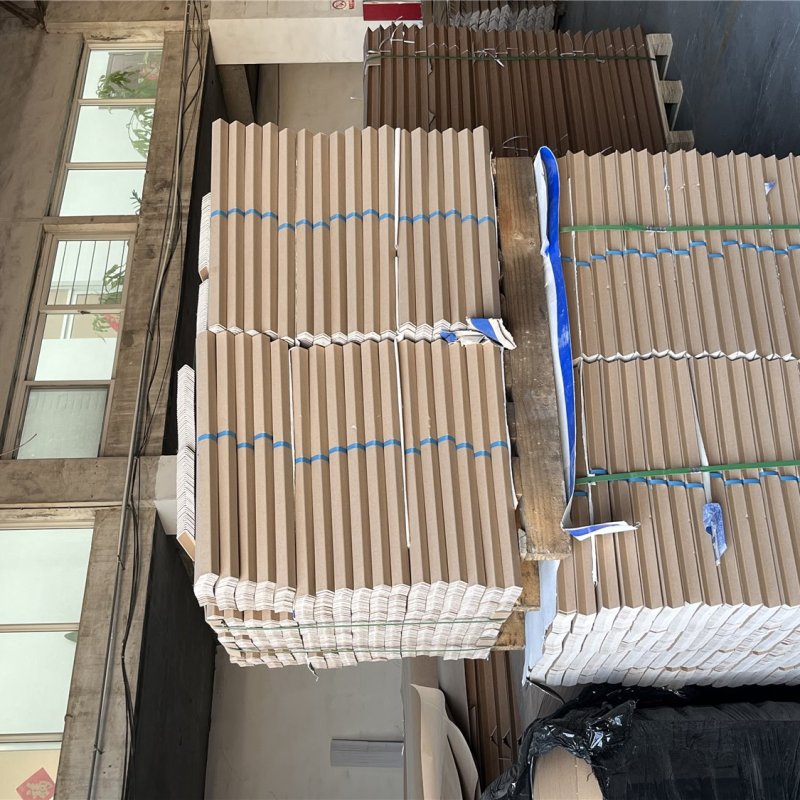
For most industrial pallets the justification is practical. Paper board is stiff enough to spread a strap load, it can be cut and notched to any length, it does not splinter, it can be printed, and it packs flat for freight to the packing line. It also goes into the same waste stream as the cartons it protects, which simplifies unpacking at the destination.
The limits are equally practical. Paper is not waterproof, so it is the wrong choice where the pallet will sit in standing water. It is not a structural member, so it does not rescue an overloaded pallet. And its performance depends on grade and construction, which is why the specification should come from the supplier rather than from a generic catalogue figure.
Four, one per vertical corner, at minimum. Where the pallet is tall, heavily strapped or handled repeatedly, longer protectors or additional pieces at the bottom layer are worth discussing.
They are strong enough to spread strap pressure and protect corners, which is their function. They are not a substitute for a pallet rated for the load. The two decisions — pallet strength and edge protection — are separate.
Under. Protectors are fitted to the corners first, then strapped, then wrapped. Film applied before the protectors leaves them loose and the wrap already relaxed.
They do not prevent condensation. Keeping the protectors dry and the load off the container floor reduces the moisture the pack can absorb, which is a related but different problem.
For identification and handling marks, often yes, and printing on the protector keeps the mark off the product surface. It does not replace shipping documentation.
Load weight, pallet footprint and height, carton or product dimensions, strapping method, film specification if already fixed, destination, transit time and any previous damage. A single photograph of a packed pallet saves several questions.
Hengnice has manufactured paper edge protectors for 16 years, operating eight production lines in a factory of roughly 4,500 square metres and producing about two 40HQ containers per day. L-shaped, U-shaped, bent, flat, circular and printed profiles are all produced in-house, so the edge protection layer of a pallet system can be specified as one package rather than assembled from several suppliers. Custom sizes, printing, OEM and ODM work, product development, quality inspection and export packaging are handled internally.
To discuss a pallet specification, send the load details, strapping method and destination to mona@hengnicepacking.com. The L-shaped paper corner protectors page covers the pallet corner range, and the full packaging range is listed under products.
