

Container moisture is the most common cause of paper packaging failure that no supplier can see at the factory gate. A pallet packed dry in Shandong can absorb water for three weeks at sea and arrive with soft corner protectors, wavy carton walls and print that has run. Nothing was wrong with the specification on the day it was made.
The mechanism is simple. Warm air holds more water than cold air. When a container cools at night or crosses a climate zone, that water condenses on the coolest surface inside — often the container ceiling or the cargo itself — and then drips or is absorbed. Paper is hygroscopic: it takes water from the air and loses stiffness as it does.
Four sources, and only one of them is rain.
| Source | How it enters | What it affects |
|---|---|---|
| Container rain | Condensation on the ceiling, dripping onto the load | Top layer cartons, top corner protectors |
| Cargo sweat | Moisture released by the cargo itself as it cools | Everything inside the wrap |
| Pallet and deck | Damp timber or a wet container floor | Bottom layer, bottom edges |
| Loading conditions | Rain during loading, humid day, wet forklift | The whole pack, before the doors close |
Container rain is the one that surprises buyers, because the container was dry when it was loaded. It is also the reason ventilation and stowage matter as much as the packaging itself.
It reduces stiffness, and stiffness is the entire function. A dry L profile spreads a strap load because the board resists bending. A damp board bends more easily at the same load, so the strap presses closer to the carton edge and the corner geometry starts to collapse. The protector is still present; it has simply stopped doing the job.
Three secondary effects follow. A damp board pressed against a finished surface can leave a mark or a shadow that appears only after unpacking. Print on a damp board can transfer. And a board that has been wet and dried has a different surface from one that never was, which shows on pale or coated goods.
What paper does not do is seal. An edge protector is not a moisture barrier, and no paper profile should be specified as one. The barrier, where one is needed, belongs in the wrap or the bag, not in the corner.
Storage and fitting discipline outweigh the specification of the board in most claims we see described as moisture problems.
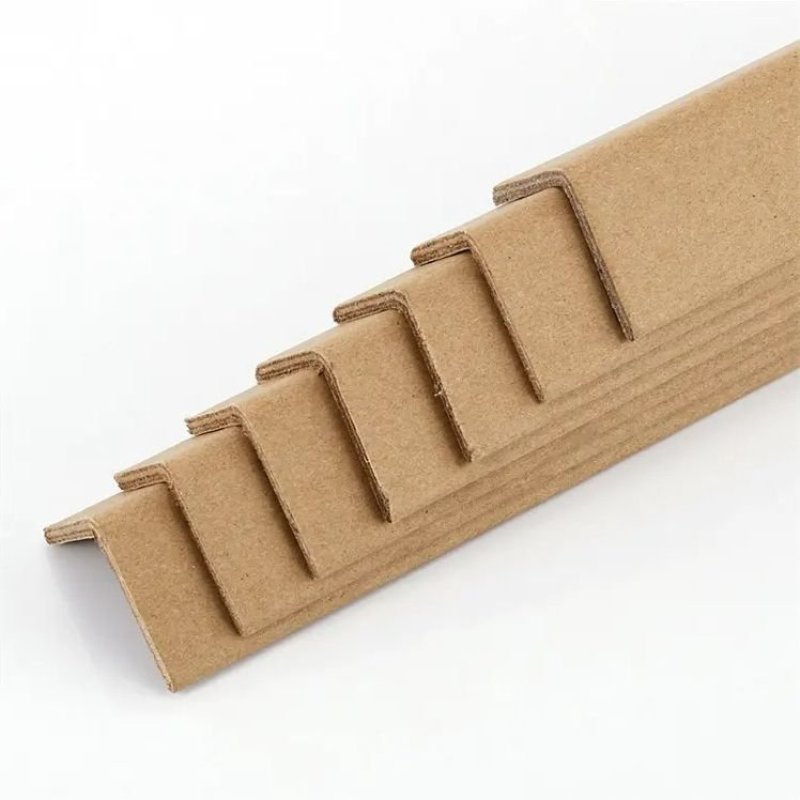
Some packs should not use paper at all, and saying so is more useful than qualifying it.
Standing water, outdoor storage, open-deck transport and any route where the load will be rained on repeatedly are plastic or timber territory. A coil stored in a yard for months is not a paper application. Neither is a pack that will be re-used through several wet cycles.
Between those extremes, the honest answer is usually a hybrid: paper at the edges because it is cheap and it spreads load, with the moisture problem solved by the wrap, the desiccant or the stowage rather than by upgrading the protector.
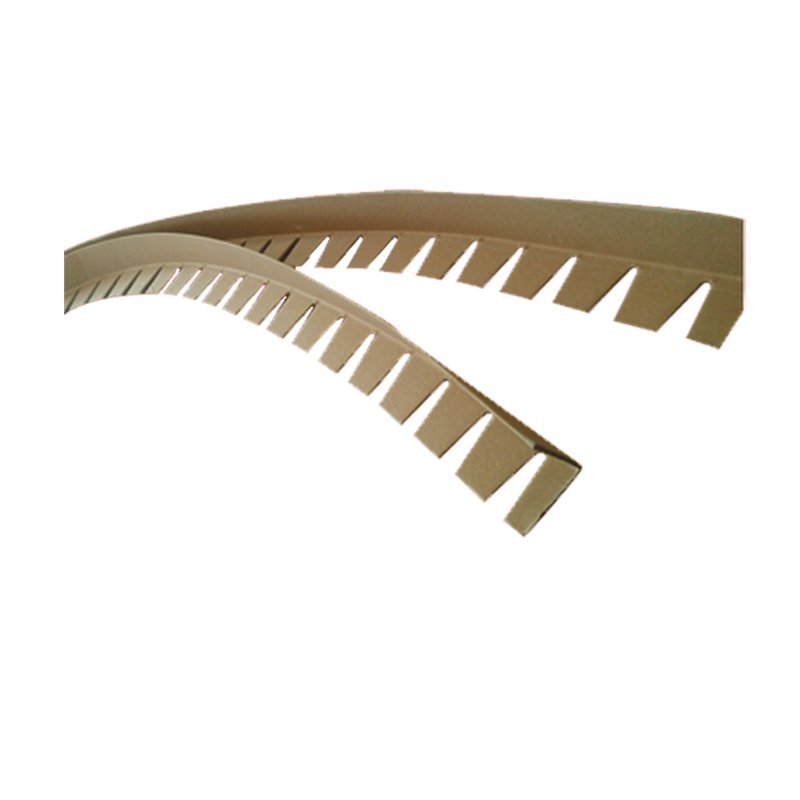
A short pre-shipment check catches most of what goes wrong, and it takes minutes per pallet.
| Check | Pass condition | If it fails |
|---|---|---|
| Protector feel | Stiff, snaps back when flexed | Replace from a sealed bundle |
| Surface | Dry to the touch, no discolouration | Do not fit |
| Pallet deck | Dry, no damp patches | Change the pallet |
| Container floor | Dry, clean, no standing water | Reject the container |
| Wrap | Complete, sealed at top and base | Rewrap before loading |
| Loading weather | Dry | Protect the top layer, replace wet edges |
For a long sea leg, three practical choices are worth making even when the board grade stays the same: fit the protectors last so they spend the least time exposed on the packing floor, keep the pallet wrap complete so the load is not breathing container air directly, and agree with the forwarder how the container is stowed and ventilated rather than leaving it to the loading crew.
Where the cargo itself is moisture-sensitive, the pack design should treat desiccant and barrier film as part of the system, with the paper protector doing the mechanical job it is good at. Mixing the two roles is where specifications go wrong: a barrier film asked to spread a strap load will be cut, and a paper protector asked to keep water out will fail.
Hengnice has produced paper edge protection for 16 years across eight production lines, with a factory of roughly 4,500 square metres and around 200,000 metres of output per day. L-shaped profiles run from 2.5 mm to 8 mm wall, 25-100 mm leg and up to 6,000 mm length, and the same board is used for U, bent, flat and circular profiles, so a pack can be specified as one order.
Yes. Paper absorbs moisture from the air, and a container can condense water on its ceiling during a long voyage. A damp protector loses the stiffness that makes it useful.
No. A coating can slow moisture take-up, but no paper profile is a moisture barrier. The barrier belongs in the wrap or bag.
Wrapped, off the floor, on a pallet, in a dry area, and opened only when the run starts.
It is not the same component. Replace it at the contact points rather than drying it in place on the pallet.
Anything stored outdoors, exposed to standing water or re-used through wet cycles. Plastic or timber is the correct answer there.
It reduces condensation on the cargo, which is why stowage and container condition are part of the pack decision rather than the forwarder's problem alone.
Send the destination, the expected transit time, the cargo and how the pallet is wrapped to mona@hengnicepacking.com, and the answer can address moisture rather than only dimensions. The paper corner protector range covers the profiles referred to here, and the circular range covers ring protection for coil and roll rims.
