Flat paper edge protector is a straight, unformed kraft strip that lays against a flat surface instead of wrapping a corner. Width 50-200 mm, thickness 2.6-6 mm, any length, cut square. It is the profile appliance makers and panel packers reach for when the edge is already inside a carton, a layer pad or a foam shell, and what is needed is a protective strip on a face rather than a channel around a corner.
What Is a Flat Paper Edge Protector Used For?
A flat paper edge protector is a solid board, laminated from kraft paper plies, with no fold and no channel. Because it has no shape, it does three jobs that a formed profile cannot do as well: it sits flat against a face, it slides behind a product inside a carton, and it bridges a gap between a product and the carton wall so the load cannot shift sideways.
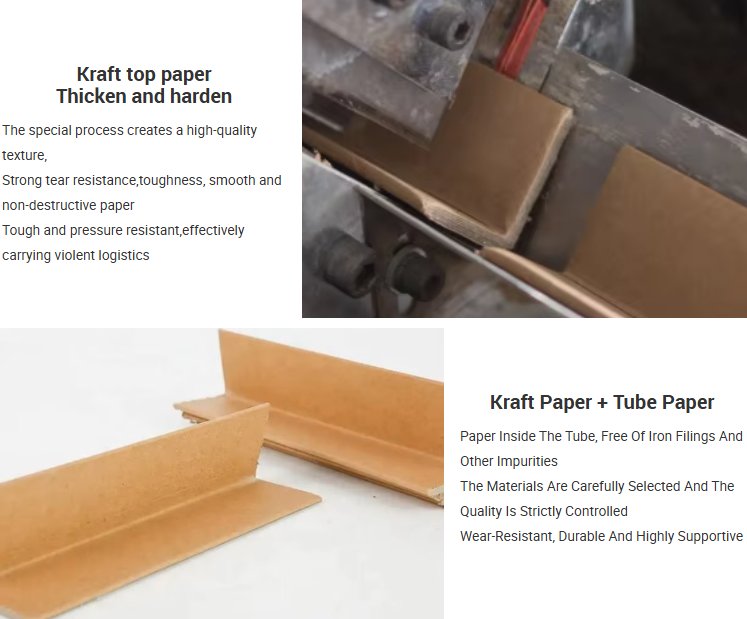
The material is the same as an angle board - kraft paper and roll paper bonded with eco-friendly glue, fully wrapped, no raw edge - so the strip travels with the product and recycles with the carton. What changes is the geometry and the job: this is a protection strip, not a corner guard.
Flat versus L and U profiles
An L profile protects the corner where two faces meet. A U profile grips a panel edge on three faces. A flat strip protects a single face, or forms a sacrificial layer between a product and whatever is pressing on it. In appliance packaging all three appear in the same carton: a U channel on the door edge, an L angle on the cabinet corner, and a flat paperboard strip across the top and bottom where the carton rests on the unit.
Flat Paper Edge Protector Specifications
| Profile | Flat, solid paperboard strip, no fold |
| Material | Kraft paper, roll paper, eco-friendly glue |
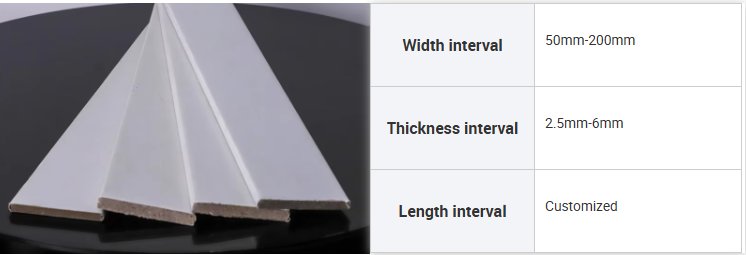
| Width | 50-200 mm, customizable |
| Thickness | 2.6-6 mm, customizable |
| Length | Any length, cut square to order |
| Cut | Square cut, or die cut to a shape on request |
| Colour and print | White or kraft brown, logo and text printable |
| MOQ | 3,000 meters |
| Daily output | 200,000 meters |
| Lead time | Shipment within 7 days of deposit |
| OEM and ODM | Available, including width, print and packing |
Choosing Width, Thickness and Length
Width is set by the surface you are protecting, not by the product size. A 50-80 mm strip covers a carton flap seam or a narrow face; 100-150 mm spans the top of a refrigerator or the back of a washing machine; 150-200 mm is used where the strip has to spread load across a wide flat panel, such as a glass sheet or a stone slab standing in a crate.
Thickness follows the pressure: 2.6-3 mm for a light separation layer inside a carton, 3-4 mm where the strip sits under a strap or across a carton flap, 4-6 mm where the board has to bridge a gap or carry the weight of a product resting on it. Length is normally the panel or carton dimension plus 20-50 mm, so the strip can be folded over the end if the packer needs to hold it while taping.
Where Flat Strips Are Used
- Appliance packaging - top and bottom protection strips between the unit and the carton, plus face strips under the foam end caps
- Pallet packaging - layer-edge strips that stop cartons cutting into the layer below
- Furniture - face protection between stacked panels
- Glass and mirror panels - wide strips that spread point load and keep sheets apart
- Metal sheet and plate - strips that stop surface scratching and strap marking
- Carton reinforcement - strips glued or stapled inside a carton to stiffen a long seam
- General packaging - any place where a flat sacrificial layer is cheaper than a formed profile
Printing and Die Cutting
Flat strips print cleanly because the surface is a continuous plane - one or two colours on white or kraft base, with a logo, a part number, a handling icon or a QR code that resolves to assembly instructions. Because there is no fold, print registration across the full width is better than on an angle board.
Die cutting is available where the strip needs a notch, a rounded end, a slot for a cable or a hole for a fixing. Send a drawing and the cut is set in the same production run as the width.
Packing, MOQ and Delivery
The minimum order is 3,000 meters, and the line runs 200,000 meters a day, so a trial for one appliance model and a repeat program can come from the same factory. Strips ship in bundles or palletized cartons, banded and wrapped, normally within 7 days of deposit. Printed or die cut runs are confirmed against the artwork date.
Frequently Asked Questions
Q: What is a flat paper edge protector?
A: It is a straight laminated kraft paperboard strip with no fold, used to protect a flat face or to separate a product from the carton, pallet or the layer above it.
Q: What is the difference between a flat strip and an L-shaped protector?
A: An L profile protects a corner on two faces. A flat strip protects one face and is used inside a carton, between layers or under a strap, where a shaped profile would not fit.
Q: What width and thickness should I order?
A: 50-80 mm wide and 2.6-3 mm thick for light separation, 100-150 mm and 3-4 mm for appliance faces and carton flaps, 150-200 mm and 4-6 mm where the strip carries load or bridges a gap.
Q: Can it be die cut to a shape?
A: Yes. Notches, rounded ends, slots and fixing holes can be cut in the same run as the width, against a drawing.
Q: Is the strip recyclable?
A: Yes, it is kraft paper with eco-friendly glue and no plastic layer, so it recycles with the cartons.
Q: Can our logo be printed?
A: Yes, one or two colours on a white or kraft base, with better registration than a formed profile because the surface is flat.
Q: What is the MOQ and lead time?
A: 3,000 meters, with shipment within 7 days of deposit for standard specifications.
Q: Do you supply samples?
A: Yes. We cut samples of your width and thickness and you cover the express cost, so the strip can be tested inside your own carton.
Request a Flat Paper Edge Protector Quote
Send the width, thickness, cut length, quantity in meters and whether the strip needs printing or die cutting. We return the price, the packing plan and the delivery date. Email mona@hengnicepacking.com with the subject line flat paper edge protector plus your strip width.


