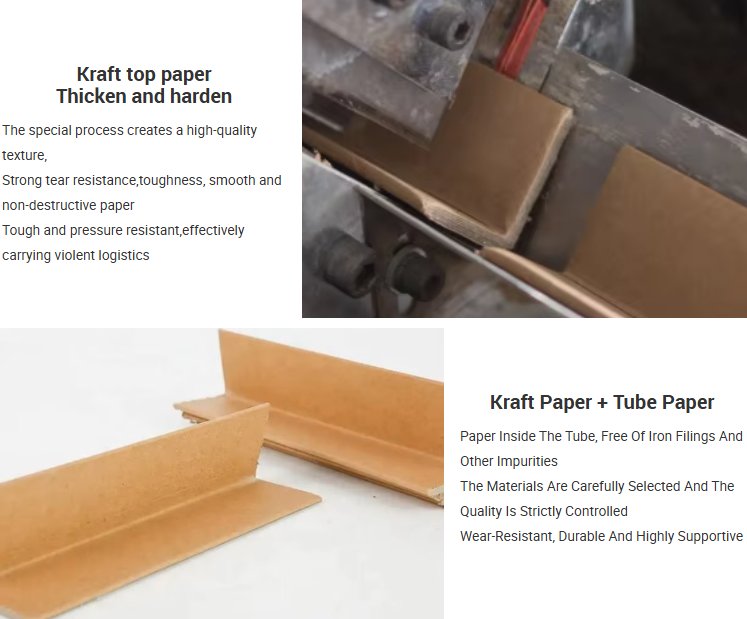
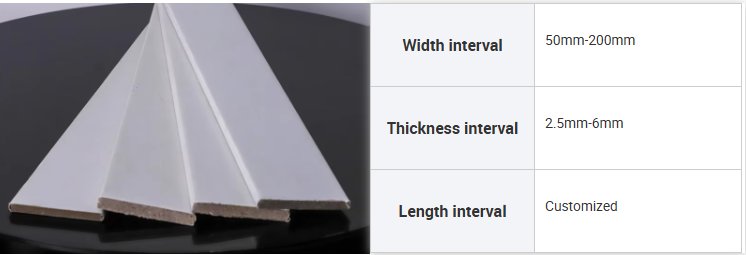
Anti-pressure flat paper corner protection is a solid kraft board laid between layers to stop the weight above marking what is underneath. Width 50-200 mm, thickness 2.6-6 mm, any length. It is specified where the load is not strapped but stacked - multi-layer pallets, racked storage, machine bases, sheet stacks - and where the damage is a permanent indentation rather than a crushed corner.
Pressure Marks Come From Small Contact Areas
Put a 500 kg layer on a pallet and the load travels down through whatever touches first. If the contact is a carton edge, a pallet foot or a machine corner, the pressure at that point is enormous and the layer below takes a permanent set - a dent in a painted panel, a crushed flute, a ring on a polished surface. A flat board between the layers grows the contact area, and the same load is spread until it is below the point where the material deforms.
That is the entire mechanism. There is no clever geometry in a flat strip; there is only area. Which is why width matters more than thickness on a pressure problem, and why a 150 mm strip at 3 mm usually outperforms a 60 mm strip at 6 mm.
Where an indentation becomes a claim
Pressure damage is quiet. Nothing breaks, nothing leaks, and the carton looks fine at the dock. It shows up when the customer opens the box: a mark on a painted panel, a flat spot on a foam gasket, a ring on a brushed metal face. By then the cost is a return, not a protector.
Anti-Pressure Flat Paper Corner Protection Specifications
| Profile | Flat solid paperboard, no fold |
| Material | Kraft paper, roll paper, eco-friendly glue |
| Width | 50-200 mm, customizable |
| Thickness | 2.6-6 mm, customizable |
| Length | Any length, cut square to order |
| Cut | Square cut, die cut to shape on request |
| Colour and print | White or kraft brown, logo and text printable |
| MOQ | 3,000 meters |
| Daily output | 200,000 meters |
| Lead time | Shipment within 7 days of deposit |
| OEM and ODM | Available, including width, print and die cut |
Width, Thickness and the Load Above
Three specifications cover most pressure work. For cartons stacked three or four high, 100-150 mm wide at 3-4 mm under each layer edge. For panels, sheet stacks and machine bases, 150-200 mm at 4-6 mm. For a single heavy unit sitting on a small foot, 200 mm at 6 mm placed under the foot, not around it.
One rule of thumb that saves material: place the board where the load touches, not along the full length of the layer. A strip under the pallet foot and a strip under each carton corner does more than a continuous band around the perimeter, because it puts paper directly between the load path and the surface.
Where Pressure Boards Are Used
- Multi-layer pallets - stops the upper layer marking the cartons below
- Racked storage - the bottom layer carries the column for months, not days
- Machine and equipment bases - spreads a foot or a frame rail across a wider area
- Sheet and panel stacks - prevents edge set and surface marking
- Painted and coated surfaces - a paper interface where foam would leave a residue
- Concrete and stone - sacrificial layer where the product would otherwise chip on contact
Why Paper Rather Than Foam or Timber
Foam spreads load but compresses permanently and leaves a residue on a painted face; it also has to be separated from the cartons at the far end. Timber spreads load well but adds weight, needs ISPM 15 treatment and arrives as wood waste. A paper board spreads load, weighs almost nothing, needs no treatment and disposes with the cartons.
Where timber still wins is a structural deck carrying a tonne across a span. Everything short of that - layers, pads, feet, bases - a flat paper board at the right width does the job.
Printing and Die Cutting
Print runs in one or two colours on white or kraft base: model number, layer number, a handling icon or a QR code. Because the surface is flat and continuous, registration is better than on any formed profile, and a printed pad is often the cheapest branded element on a pallet.
Die cutting covers notches, rounded ends, slots for straps and cut-outs for feet, so a single pad can be shaped to a machine base rather than built from several strips.
Frequently Asked Questions
Q: What is anti-pressure flat paper corner protection?
A: A solid kraft board laid between layers or under a load point, to spread pressure so the surface below is not permanently marked.
Q: How is it different from a corner protector?
A: A corner protector covers an edge or corner. This board covers an area of contact, and it is used where the damage is pressure rather than impact.
Q: Width or thickness - which matters more?
A: Width. Pressure is force over area, so a wider strip at 3 mm usually beats a narrow strip at 6 mm.
Q: How wide for cartons stacked four high?
A: 100-150 mm at 3-4 mm under each layer edge; 150-200 mm at 4-6 mm for panels, sheet stacks and machine bases.
Q: Will paper leave a mark on a painted surface?
A: No, and unlike foam it leaves no residue. The board is fully wrapped, so no raw edge contacts the product.
Q: Is it recyclable?
A: Yes, kraft paper and eco-friendly glue, no film or foam to separate.
Q: Can it be die cut to fit a machine base?
A: Yes, notches, slots and cut-outs can be cut in the same run as the width, against a drawing.
Q: What is the MOQ and lead time?
A: 3,000 meters, with shipment within 7 days of deposit for standard specifications.
Request a Pressure Board Quote
Send the width, thickness, cut length, the load above and the quantity in meters, plus whether the board has to be die cut. We return the price, a sample strip and the delivery date. Email mona@hengnicepacking.com with the subject line anti-pressure flat paper corner protection plus your load weight.


